Foundation Repair in Terrell Hills, TX
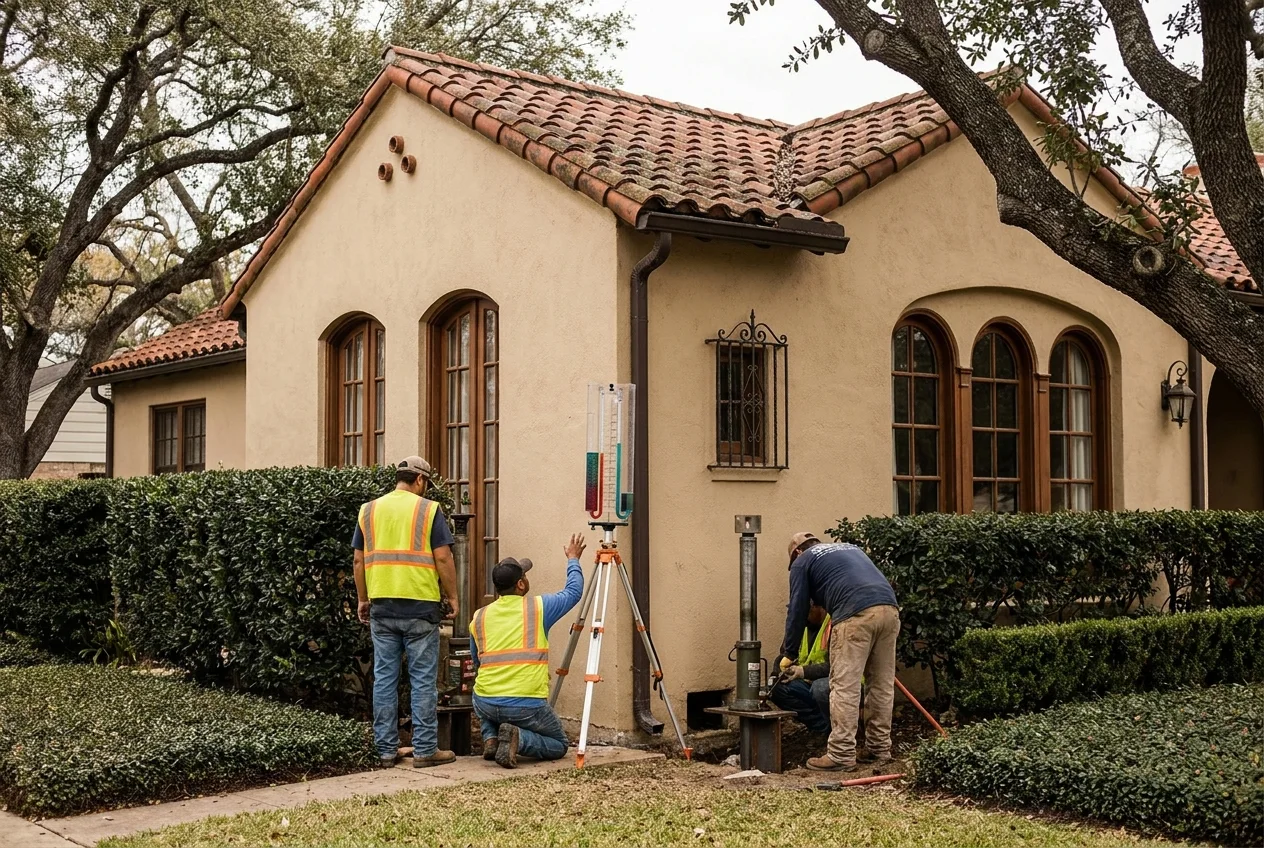
We repair the 1920s to 1950s pier and beam and slab foundations Terrell Hills is built on, lifting older homes slowly on expansive Bexar County clay to protect original plaster, brick, and hardwood.
Schedule a Free Estimate
Tell us about your project and we will get right back to you.
Need foundation repair work done right around New Braunfels?
New Braunfels Foundation Repair HQ has spent more than 18 years repairing the kind of houses Terrell Hills is known for: solid, older homes built between the 1920s and the 1950s on ground that never stops moving. Terrell Hills is an independent city in Bexar County, about 5 miles northeast of downtown San Antonio and roughly 30 miles southwest of our New Braunfels shop down I-35, so our crews work this side of the metro regularly. The city began as a private development in 1919 and incorporated in 1939, which means most of its housing stock has been sitting on Bexar County clay for 70 to 100 years. That age brings charm, original hardwoods, and foundation problems that need a careful hand.
Foundation Repair services in Terrell Hills
Every repair we bring to Terrell Hills, each with its own page.
Common Foundation Problems in Terrell Hills
Terrell Hills sits at about 800 feet, on the flat ground east of Alamo Heights and west of Fort Sam Houston, where the soil is expansive clay rather than the shallow limestone you find north of Loop 1604. That clay swells when it rains and shrinks hard in a Texas drought, and every cycle moves the foundations sitting on it a little more.
The age of the housing stock makes that movement more visible here than in newer suburbs. Three problems come up again and again in Terrell Hills:
First, original pier and beam foundations from the 1920s to the 1940s. After decades of service, wood beams sag, shims work loose, and the shallow piers those builders used ride up and down with the clay. The house above develops springy, sloping floors and doors that no longer sit square in their frames.
Second, early concrete slabs from the post-war years. Terrell Hills grew fast between 1940 and 1960, and slabs poured in that era are thinner and lighter than what engineers specify today. On expansive clay they crack and tilt at the edges, especially where a large live oak is pulling moisture out of the soil on one side of the house.
Third, old plumbing under the foundation. Cast iron drain lines from the mid-century era corrode and leak, and a slow leak under a slab feeds the clay beneath one part of the house while the rest dries out. That uneven moisture is one of the most common causes of differential settlement we find in this neighborhood.
The mature trees that make these streets beautiful add to the effect. A big oak can dry the clay under one corner of a home every summer, so the same corner drops season after season until it is re-supported properly.
Signs a Terrell Hills home needs foundation repair work
Our foundation repair process
Foundation Repair cost in Terrell Hills
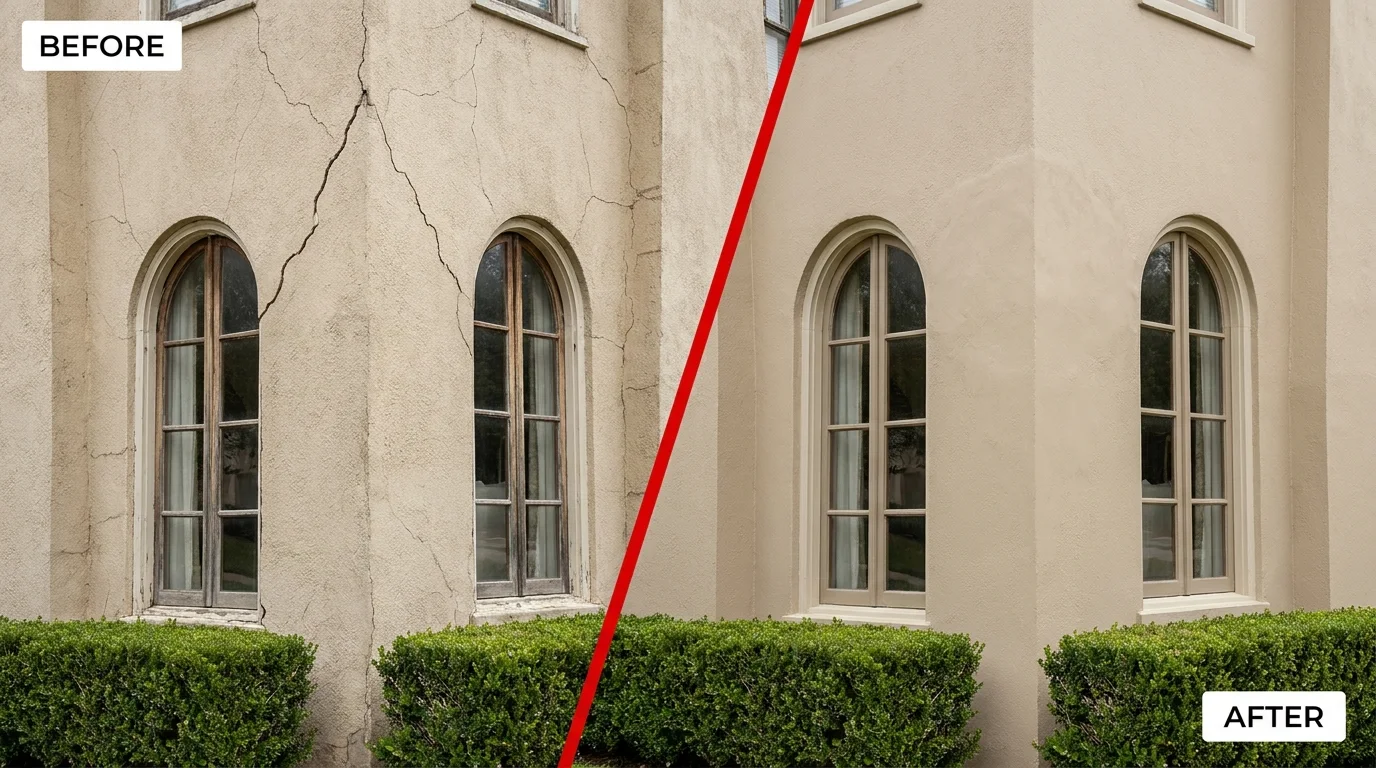
Foundation Repair in Terrell Hills, before and after
Nearby areas we serve
Our crews work throughout Terrell Hills and the neighboring incorporated cities inside the San Antonio metro, including Alamo Heights directly to the west and Olmos Park beyond it, plus Windcrest and Kirby to the east an