Expansive Clay Soil in Central Texas, Explained
Expansive clay soil swells when it absorbs water and shrinks when it dries, changing volume enough to lift, drop, and crack the foundations built on it across Central Texas.
Expansive clay soil is soil that swells when it absorbs water and shrinks when it dries, changing volume enough to lift, drop, and crack the structures built on top of it. Engineers call the behavior shrink-swell, and Central Texas has some of the most active shrink-swell clay in the country. New Braunfels sits right on the seam where Hill Country limestone gives way to deep prairie clay, which is why foundation problems here follow the weather as much as the calendar. This guide explains why this stretch of Texas has so much of it, how it moves a house, and how repairs are engineered around it.
Key takeaways
- Expansive clay swells when wet and shrinks when dry, moving the soil under a foundation by inches each season.
- New Braunfels sits on the Balcones Fault, where Hill Country limestone meets the prairie clay that drives most local foundation damage.
- Drought, large trees, plumbing leaks, and cut-and-fill lots all make the shrink-swell movement worse.
- Repairs are engineered for clay by seating piers on stable strata and keeping soil moisture even with drainage.
What Expansive Clay Is and Why It Swells
All soil holds some water, but expansive clay soaks it up at the mineral level. The troublemakers are clay minerals in the smectite family, the best known of which is montmorillonite. Picture each particle as a stack of extremely thin sheets, something like a ream of paper shrunk down to microscopic size. Water molecules are drawn into the gaps between those sheets, and as they crowd in, the stack physically expands. Multiply that by trillions of particles and the ground itself grows in volume.
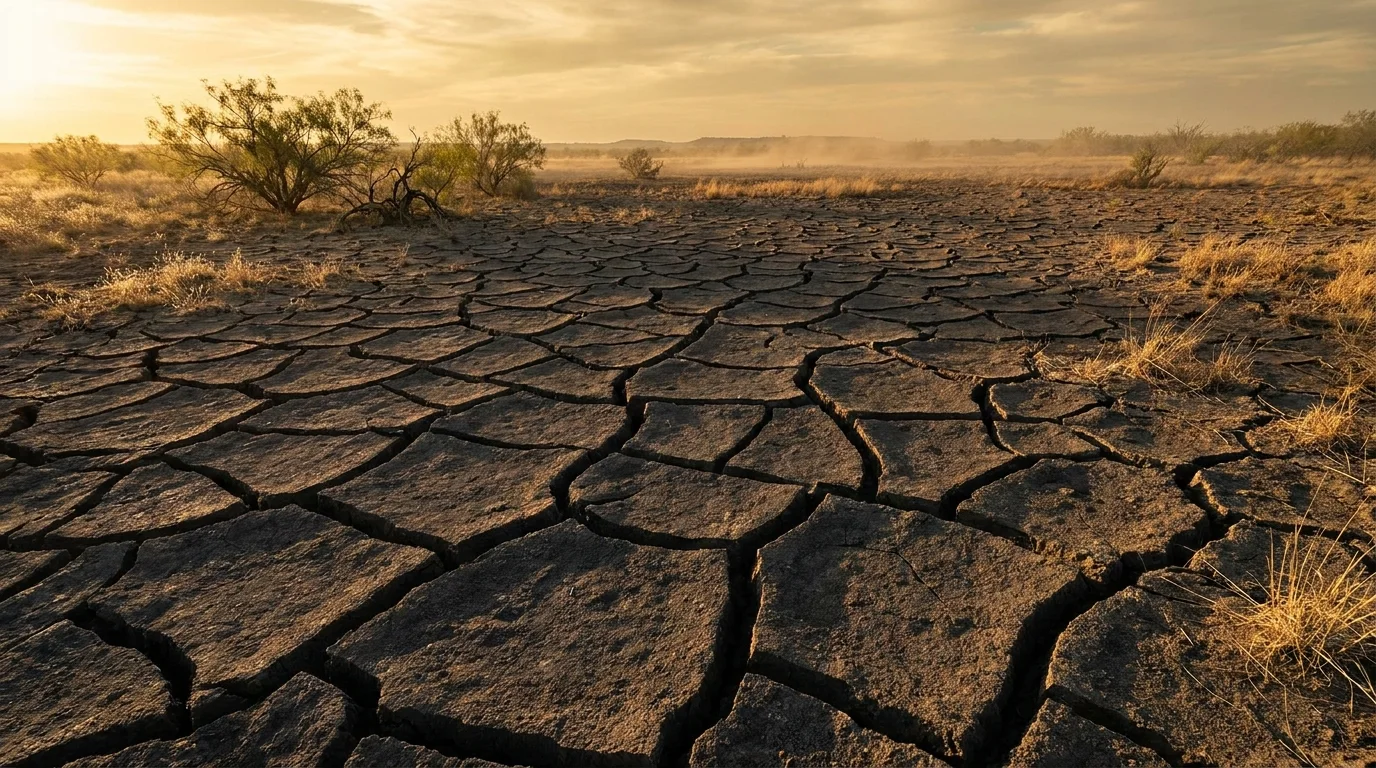
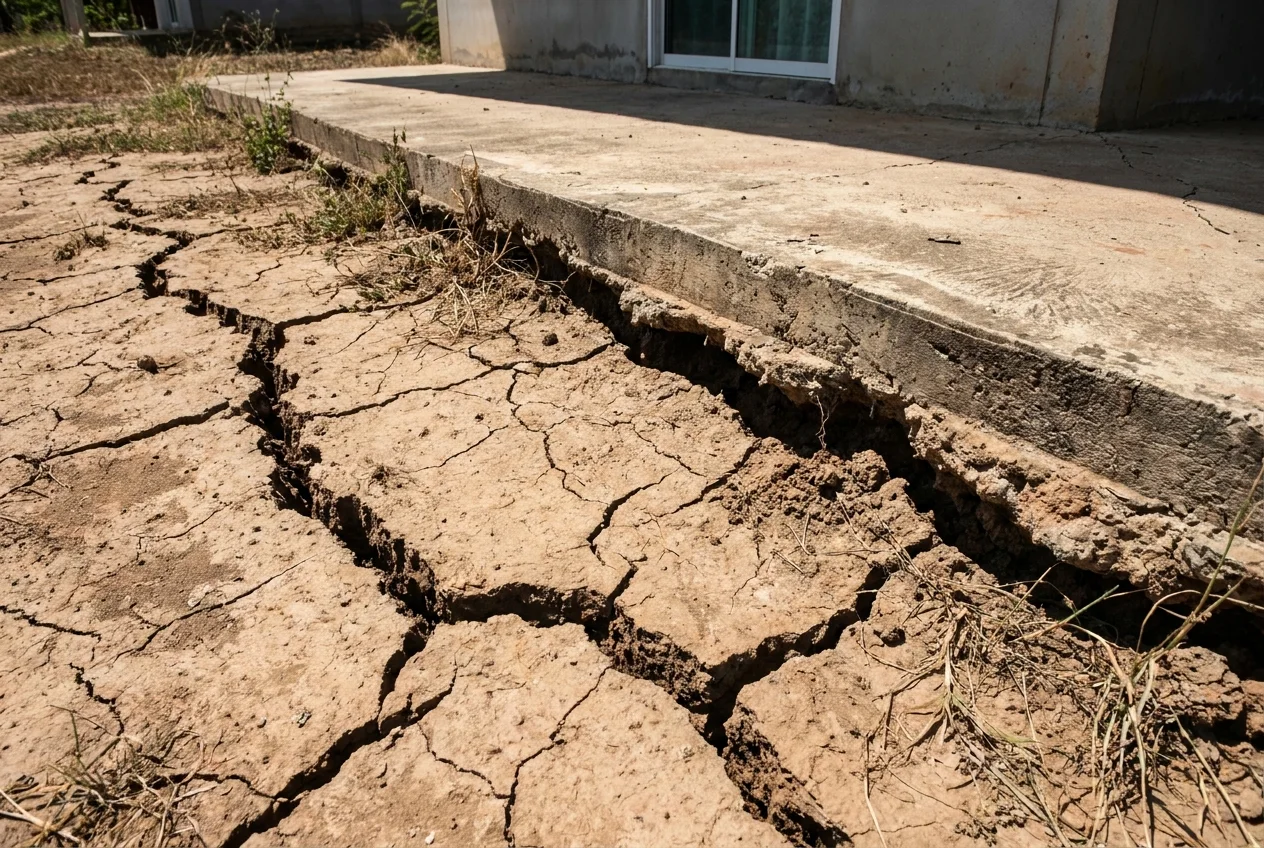
The reverse happens in dry weather. As moisture leaves, the sheets draw back together, the soil shrinks, and the surface splits into the wide cracks you can see in any Central Texas field by late summer. The force involved is not trivial. Swelling clay can push with pressure far greater than the weight of a typical house pressing down on it, which is why a concrete slab weighing many tons is simply along for the ride.
Not every clay behaves this way; kaolinite-rich clays barely move. Central Texas clays are heavy with smectite, so they respond to every wet spell and every drought.
The Balcones Fault: Where the Hill Country Meets the Prairie
New Braunfels sits on the Balcones Escarpment, the long geological step where the Edwards Plateau drops off toward the coastal plain. West of that line is the Hill Country: shallow, rocky soils over hard limestone. East of it, the land flattens into the Blackland Prairie, deep beds of dark, calcareous clay laid down long ago as marine mud.
The practical result is a town split by geology. A home on the west side may sit on a thin skin of soil over rock that barely moves. A few miles east, a home in a newer subdivision can sit on many feet of high-plasticity clay that swells and shrinks with every season. Between the two extremes are transition lots where limestone and clay interfinger, which can be the trickiest ground of all, because one end of a slab may rest near rock while the other floats on active clay. That is why soil behavior, not house age, is often the best predictor of foundation trouble here.
How the Wet-Dry Cycle Moves the Ground by Inches
Engineers describe how reactive a clay is with the plasticity index, or PI. In plain language, PI measures how big the difference is between a soil at its crumbly-dry state and at its putty-wet state. The wider that range, the more the soil changes volume as moisture comes and goes. Low-PI soils shift very little, while the high-PI clays east of the escarpment can move enough that soil reports routinely flag potential vertical movement measured in inches.
Most of that action happens in what engineers call the active zone, the upper several feet of soil where rainfall, evaporation, trees, and irrigation actually change the moisture content. Below the active zone, moisture stays fairly constant year round and the soil stays put. That single fact drives almost all repair engineering: if the house can bear on something that reaches below the active zone, the seasonal churn near the surface stops mattering.
The damage mechanism is uneven movement, not movement itself. If an entire slab rose and fell together, you might never notice. Instead, the perimeter of a foundation wets and dries quickly while the soil under the center changes slowly, so the edges heave in wet winters and drop during drought while the middle lags behind. That differential is what bends a foundation.
What Clay Movement Looks Like in Your House
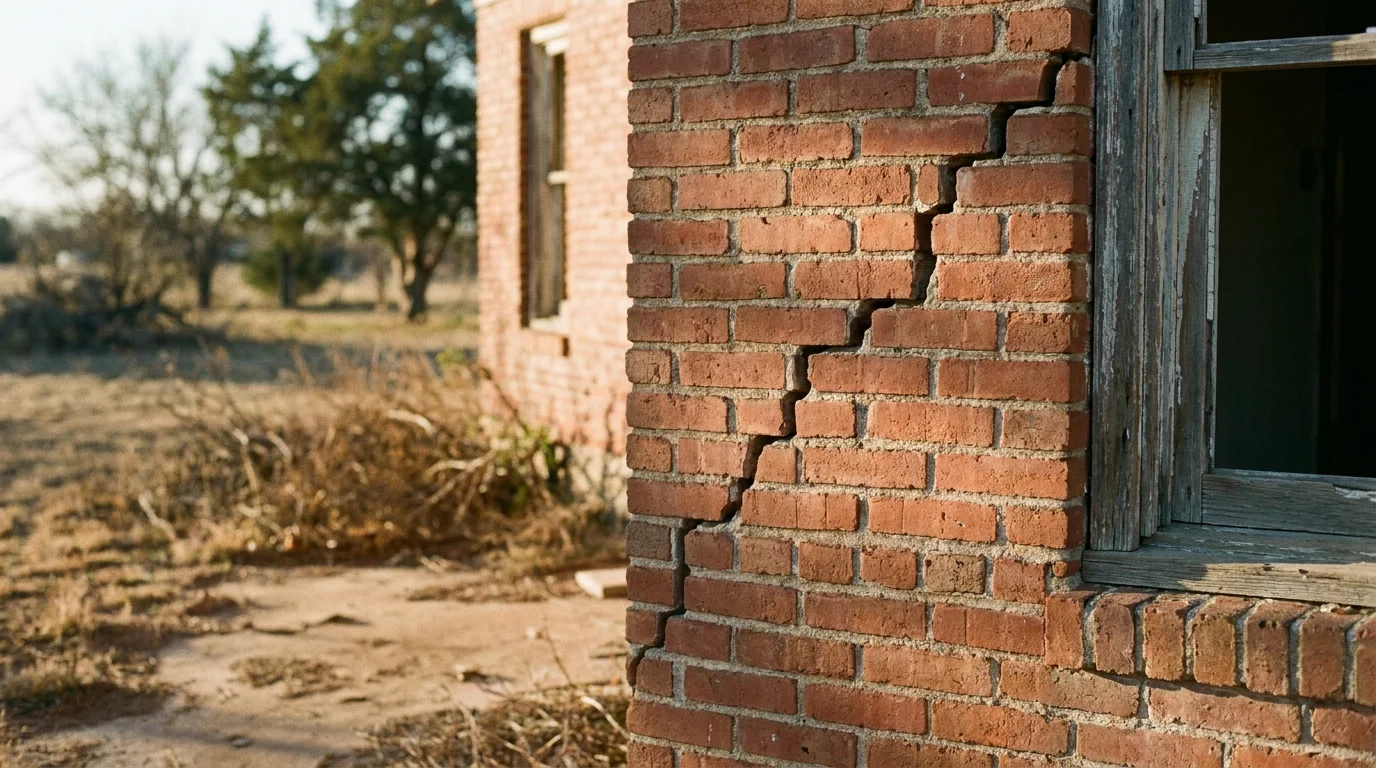
Foundation movement on expansive clay rarely announces itself as one dramatic event. It shows up as a pattern: stair-step cracks in brick veneer, drywall cracks radiating from door and window corners, doors that stick in August and swing free in February, floors that slope toward one corner, gaps opening between trim and ceiling, or a slab crack that widens a little more each summer. Symptoms that come and go with the weather are the classic clay signature.
Some of that is cosmetic and some is structural, and telling the difference requires measurement rather than guesswork. Elevation readings across the floor plan show where the foundation actually sits high or low, and by how much. If you want the pattern documented before deciding anything, a full foundation inspection maps the movement and puts the findings in writing.
What Makes Expansive Clay Worse
Several common conditions amplify shrink-swell movement:
- Drought. Extended dry spells pull moisture from deeper in the soil than a normal summer does, so the shrink phase reaches farther down and the drop is bigger. The hard rains that eventually follow then swell the ground unevenly.
- Large trees near the slab. A mature oak or elm can draw a surprising amount of water out of the soil on hot days, drying the clay on one side of the house and creating a localized settlement zone.
- Plumbing leaks. A slow leak under or beside a slab does the opposite, feeding one patch of clay so it swells and heaves while everything around it stays put. Heave from a leak is one of the most common repair triggers we see.
- Cut-and-fill lots. Hillside subdivisions are graded by cutting soil from the high side and placing it as fill on the low side. The cut side rests on undisturbed ground while the fill side sits on placed soil, and the two halves rarely move in unison.
- Uneven watering. Sprinklers that soak one flower bed while the opposite side of the house bakes create the same wet-here, dry-there imbalance.
How Repairs Are Engineered for Shrink-Swell Soil
Because the underlying problem is moisture change in the active zone, lasting repairs work on two fronts: carry the load below the churn, and calm the moisture swings around the slab.
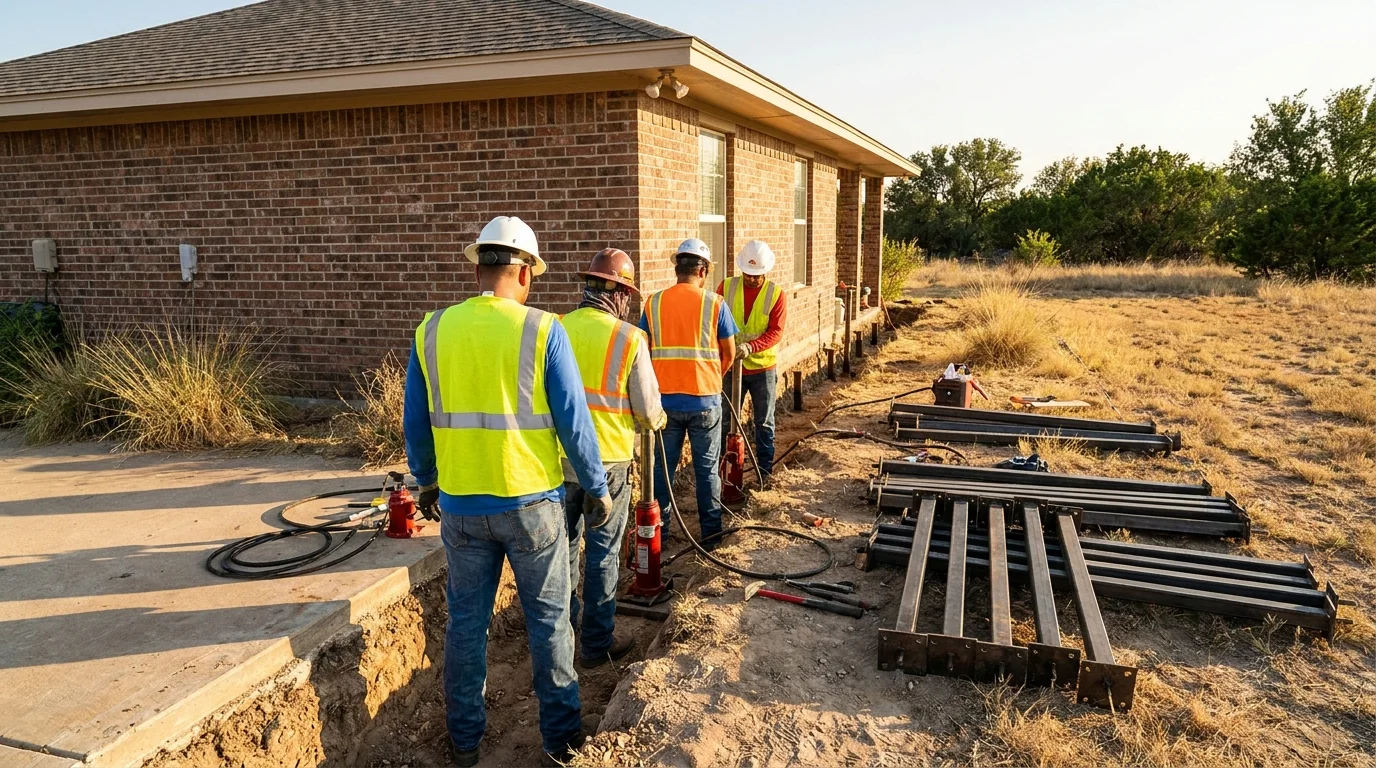
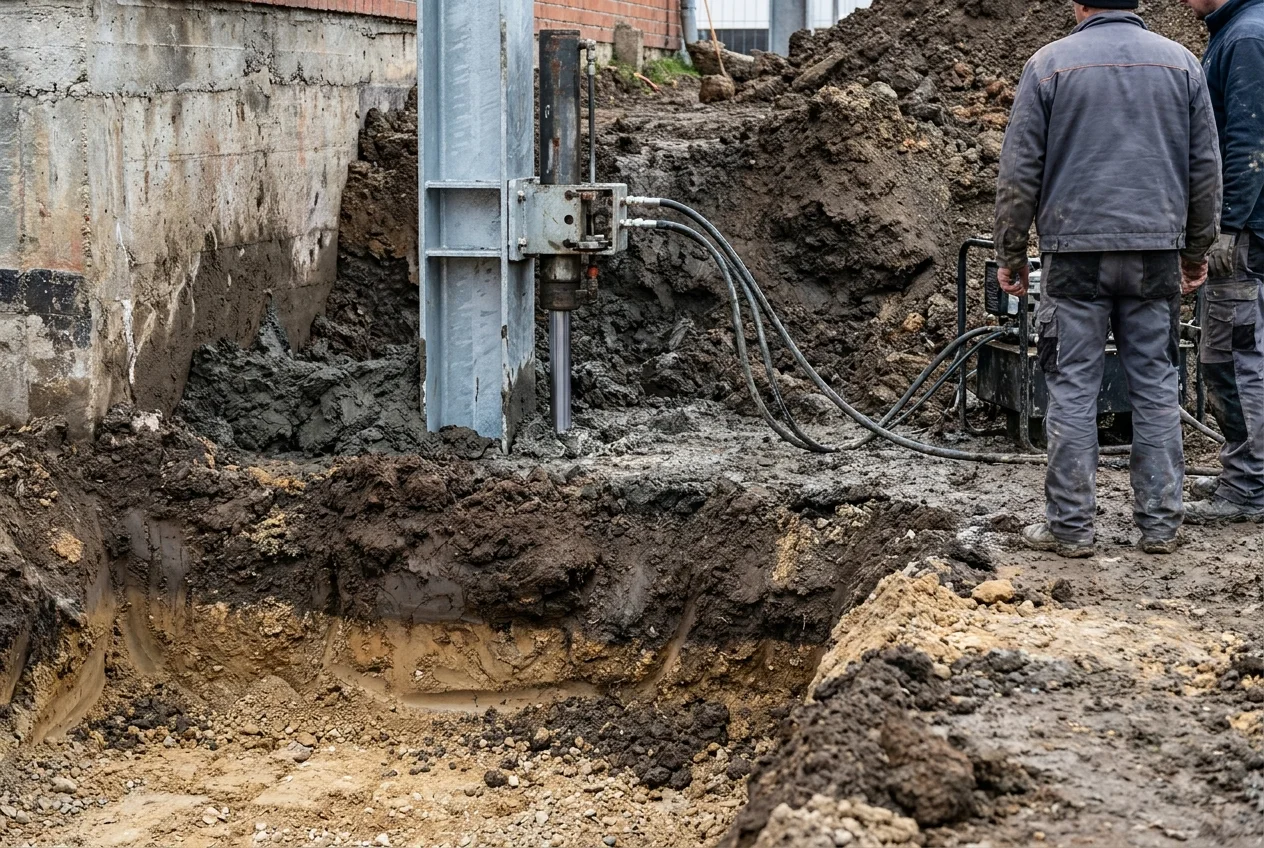
The structural fix is piering. Steel piers are driven down through the active clay until they reach stable strata, then the foundation is lifted back toward level and rested on them, so the house bears on ground that stays consistent regardless of the weather. That is the logic behind steel pressed pier installation, and pier count and depth are the main reasons the cost of a foundation repair varies so much from house to house, even on the same street.
The second front is water management. Grading that slopes away from the slab, gutters with downspout extensions, and surface or French drains all reduce how sharply the perimeter clay wets and dries. On many houses, correcting the drainage around the foundation is what protects the structural repair, and on a few it is the only work actually needed.
If your house is showing the clay pattern described above, start with information rather than a contract. You can see how we approach foundation repair across New Braunfels, or call (830) 302-3236 and describe the symptoms. A specialist who works this soil every week can usually tell you whether what you are seeing fits the shrink-swell signature.