Foundation Repair vs Replacement: Which Do You Need?
The large majority of damaged foundations can be repaired with piers and underpinning; full replacement is a rare, last-resort measure reserved for structures that no longer have anything sound to support.
In almost every case, the answer is repair. The large majority of damaged foundations, including badly settled ones, can be underpinned with piers and brought back toward level without pouring a single yard of new concrete. Full foundation replacement is a rare, disruptive, last-resort measure that only makes sense when the existing structure has nothing sound left to support.
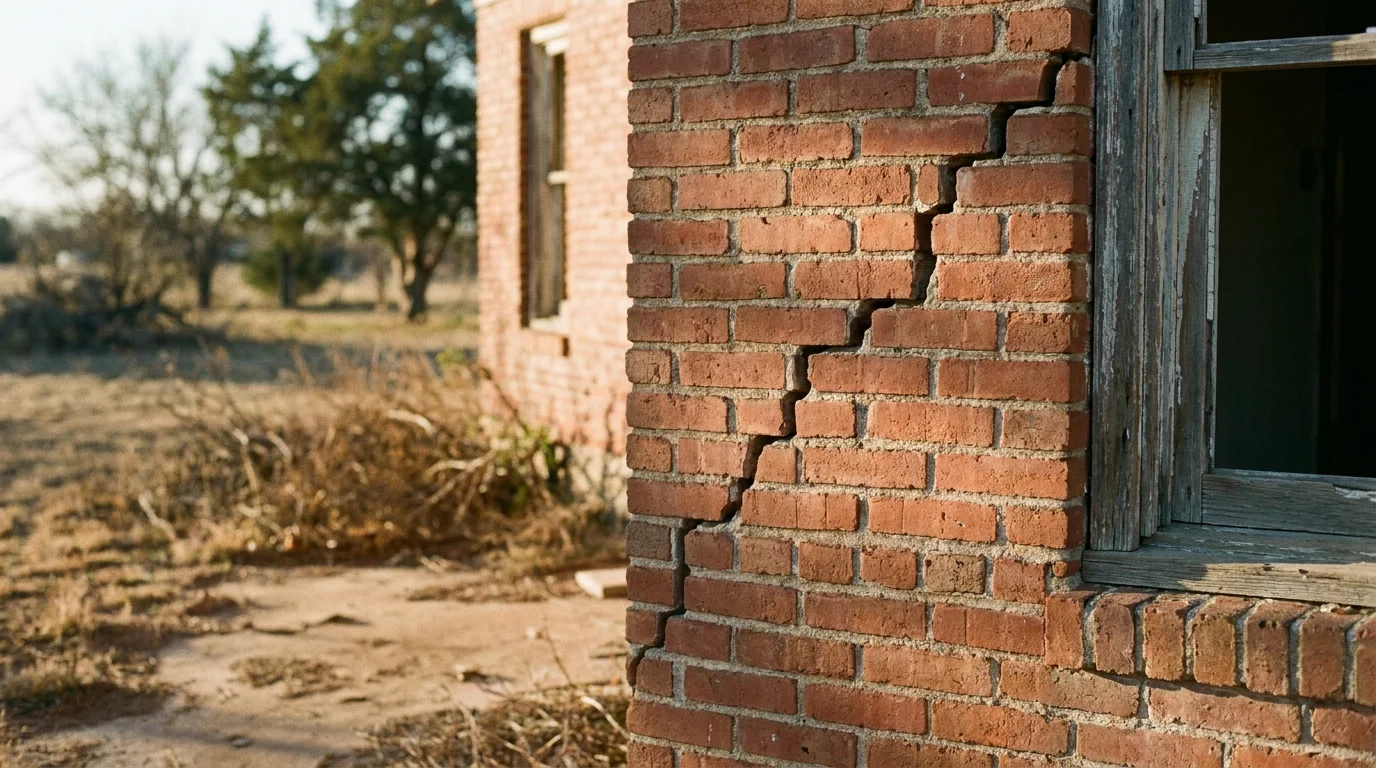
That answer surprises homeowners, because a wide slab crack or a floor that slopes an inch across the living room feels like damage that must mean starting over. It almost never does. This guide explains what repair and replacement each involve, the specific situations where replacement is genuinely warranted, how the two compare on cost and disruption, and how a proper inspection settles the question with measurements instead of guesswork.
Key takeaways
- The large majority of foundations can be repaired by underpinning with piers, not torn out and replaced.
- Repair restores support and level at a fraction of the cost and disruption of replacement, and you keep living in the home.
- Full replacement is rare, reserved for widespread wood rot under a small pier-and-beam home or a slab broken beyond repair.
- A proper elevation survey and inspection is what decides which path a home actually needs.
What Foundation Repair Actually Means
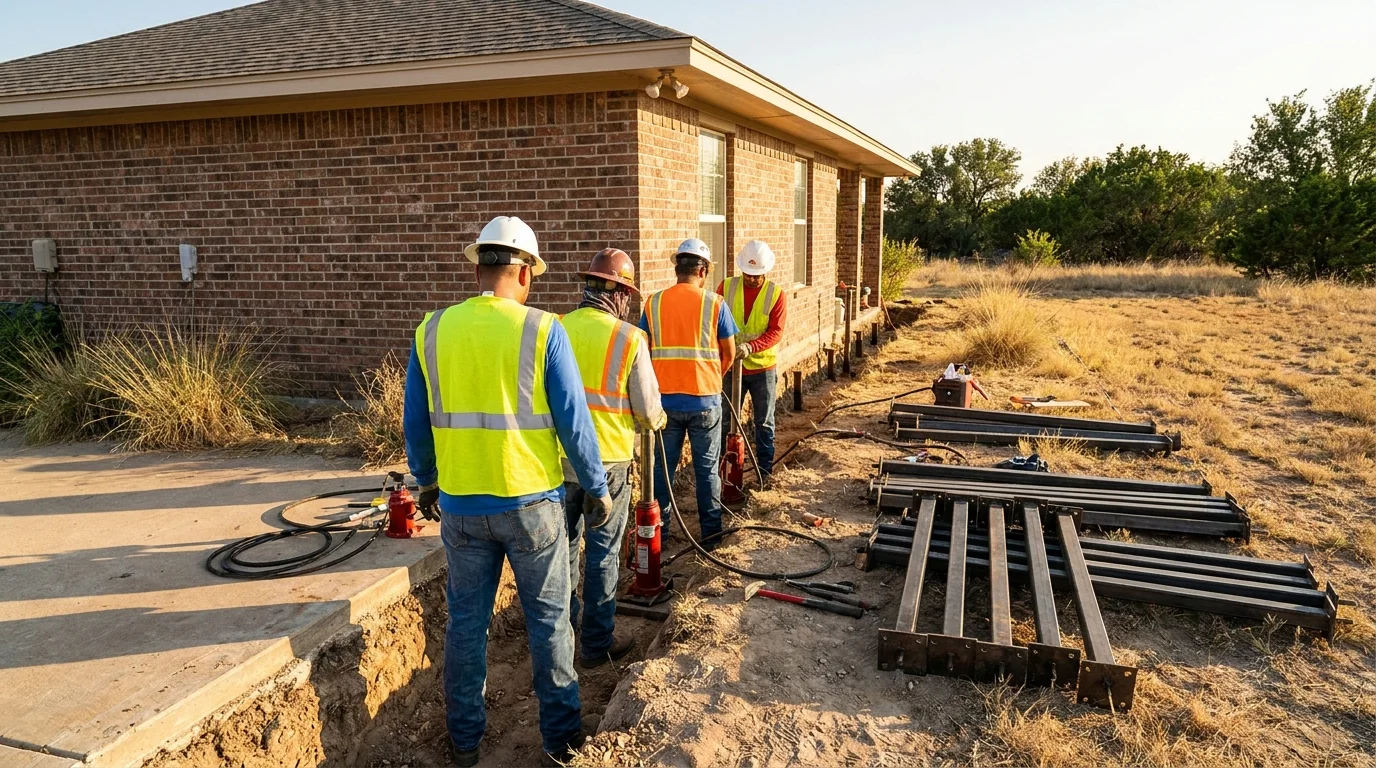
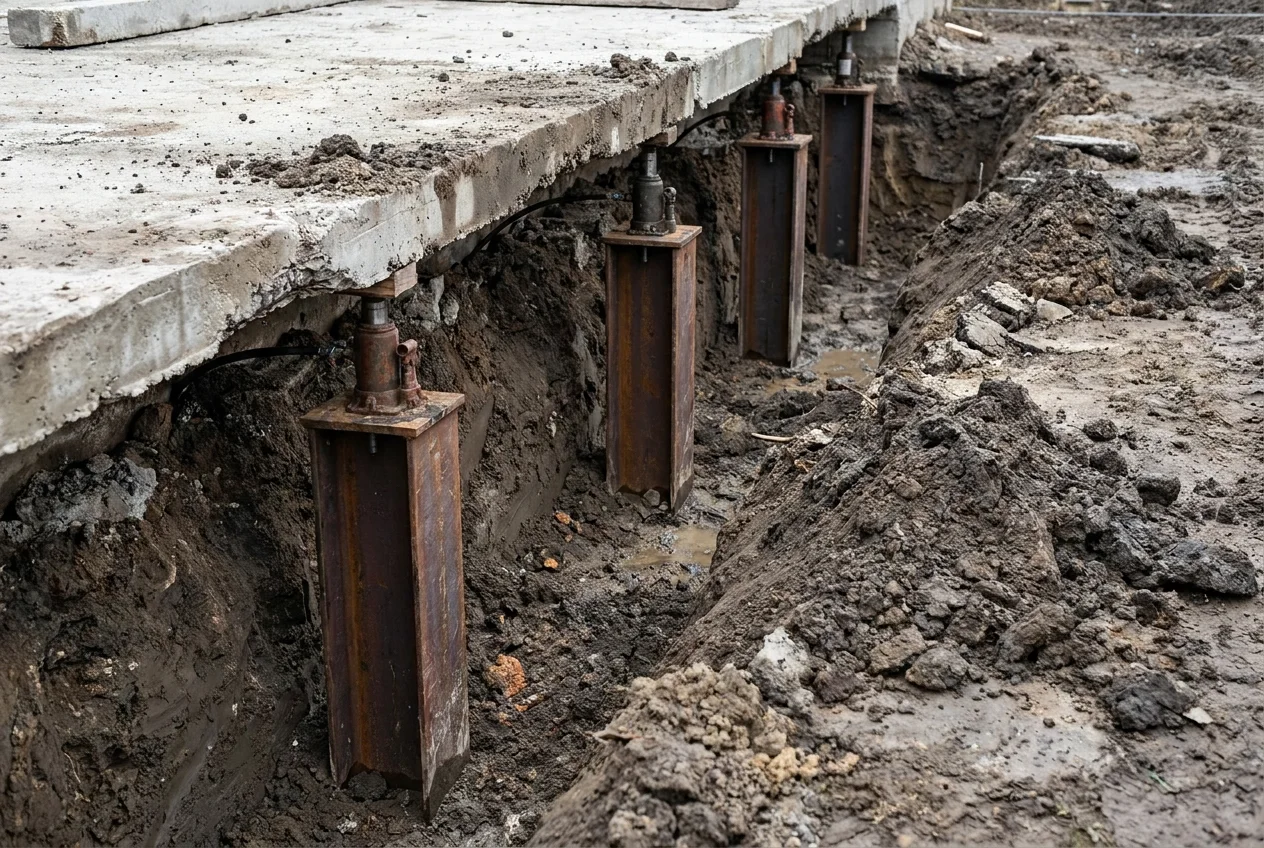
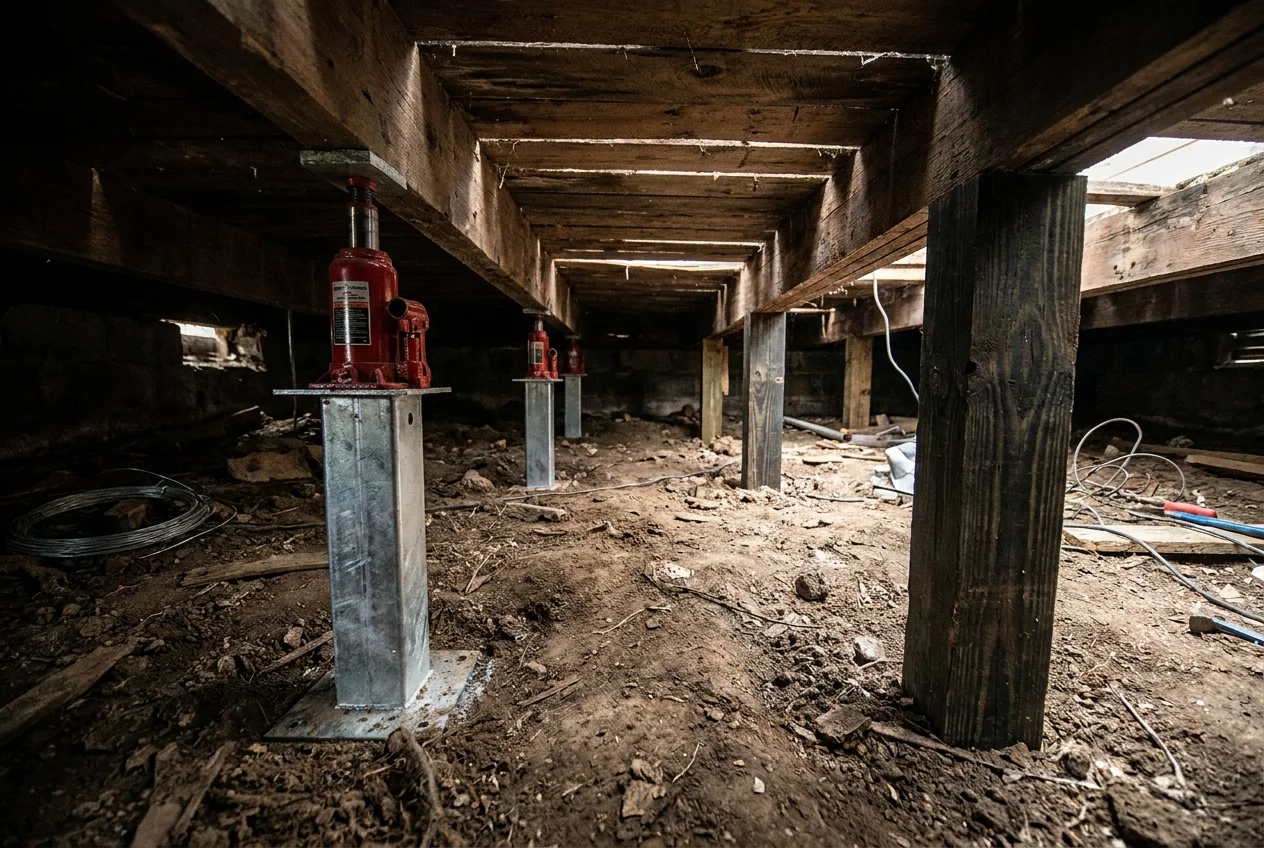
When contractors in Central Texas talk about foundation repair, they usually mean underpinning: installing piers beneath the perimeter or interior of the foundation, driving or drilling them down to stable soil or bedrock, and then using them to lift the settled sections back toward their original elevation. The existing slab or pier and beam structure stays in place. What changes is what holds it up.
This works because most foundation damage around New Braunfels is not a failure of the concrete itself. It is a failure of the ground beneath it. Homes here sit along the Balcones Fault, where Hill Country limestone gives way to expansive clay that swells in wet seasons and shrinks hard in drought. When that clay moves unevenly, part of the foundation loses support and settles, and the cracks, sticking doors, and sloped floors follow. The concrete is usually still structurally serviceable; it has simply been bent by the ground. Underpinning methods such as steel piers pressed to load bearing strata bypass the unstable clay entirely, so the foundation rests on something that no longer moves with the weather. Once the structure is lifted, most of the cracking closes and the doors start behaving again.
Repair also includes the supporting work around underpinning: releveling floor systems, repairing individual cracks, and correcting the drainage problems that fed the movement in the first place.
What Foundation Replacement Means, and How Rare It Is
Replacement means exactly what it sounds like. The house is lifted and temporarily supported on cribbing, the existing foundation is demolished and hauled away, new footings and a new slab or new piers and beams are built beneath the suspended structure, and the house is lowered back down and reconnected to its plumbing and utilities. On a slab home, replacement can also take the form of removing and repouring the slab in sections while the framing is carried on temporary supports.
It is major construction. The home is typically uninhabitable for weeks, sometimes months. Plumbing, electrical service, HVAC lines, flooring, and often interior finishes are disturbed or removed, and landscaping rarely survives. Permits and engineering are extensive because you are rebuilding the structural base of the home while it hangs in the air.
Because of all that, genuine full replacements make up a very small fraction of foundation work; a company that repairs foundations full time can go years between true replacement jobs. If the first contractor to walk your property recommends replacing the entire foundation, get a second opinion and an engineer's letter before anything else, because it is rarely the right call.
When Replacement Is Genuinely Warranted
There are honest cases where repair stops making sense, and it helps to know what they look like.
- Widespread rot under a small pier and beam home. When the sills, beams, and joists of an older pier and beam house are rotted or termite damaged across most of the structure, and the footprint is small, rebuilding the wood substructure piece by piece can approach the cost of a new foundation. At that point replacing the whole system can be the more sensible spend. Short of that, pier and beam repair that replaces only the failed members handles the overwhelming majority of these homes.
- A slab broken beyond repair. A slab that has fractured into multiple independent sections, each moving on its own, with crushed or collapsed plumbing throughout, may not have enough intact structure left to lift as a unit. This is rare and usually involves decades of unaddressed movement or a poorly built slab to begin with.
- Foundations that were never adequate. Occasionally an old home sits on stacked stone, shallow unreinforced concrete, or improvised supports that no pier system can meaningfully underpin, and modern construction beneath it is the only fix.
Notice what is not on the list: large cracks, several inches of differential settlement, previous failed repairs, or a foundation that is simply old. All of those are routinely corrected with underpinning.
Cost and Disruption: The Comparison That Settles Most Cases
Repair costs a fraction of replacement. A typical pier based repair on a New Braunfels home runs in the thousands to low tens of thousands of dollars depending on pier count and depth, and the factors that drive foundation repair pricing are itemizable and easy to compare across bids. Full replacement on the same home commonly runs several times that figure once demolition, temporary support, new construction, plumbing reconnection, and finish repairs are counted.
Disruption follows the same pattern. Most pier installations take days, not months, and you keep living in the house while the crew works outside and under it. Replacement means moving out, storing belongings, and living elsewhere while your home sits on cribbing. For most families, that indirect cost alone rules replacement out unless the structure truly demands it.
How an Inspection and Elevation Survey Decides It
The repair versus replacement question is not a judgment call made from the curb. It is answered by measurement. A proper assessment includes an elevation survey mapping how far each part of the foundation sits above or below the reference point, a crack and separation inventory, a look at the drainage and plumbing conditions feeding the movement, and on a pier and beam home, a crawl space evaluation of every wood member. Those numbers show whether the structure can be lifted as a unit, the practical test for repairability.
A documented foundation inspection with elevation readings gives you findings in writing that any engineer or competing contractor can check. That paper trail is your best protection against both overreaction, the needless replacement quote, and underreaction, the patch job that ignores real settlement.
Slab vs Pier and Beam: Does Foundation Type Change the Answer?
It changes the details, not the conclusion. Slab on grade homes, which dominate the newer subdivisions along the Interstate 35 corridor, are repaired almost exclusively by underpinning, and true slab replacement is the rarest job in the trade. Pier and beam homes, common in the older neighborhoods near downtown and Gruene, add a second question: the condition of the wood structure between the piers and the floor. Because individual beams, joists, and sills can be replaced one at a time, pier and beam homes have even more repair paths available, and full replacement only enters the conversation when nearly all of that wood has failed at once.
Either way, the sequence is the same: measure first, then match the fix to the findings. If your home is showing movement and you want to know which side of this question it falls on, our New Braunfels foundation repair crew takes elevation readings before quoting anything, and you can call (830) 302-3236 to talk through what the house is doing. Repairs we perform carry a lifetime transferable warranty, and financing is available when the timing of a repair beats the timing of the budget.